 Save
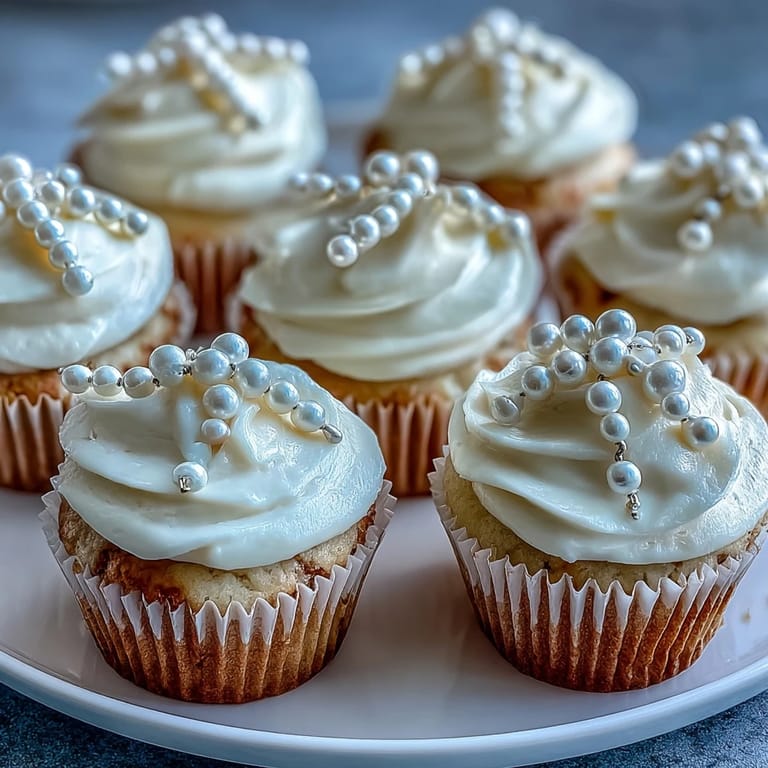
Save My hands were shaking a little the first time I made these, not from nerves about baking, but from the weight of what they represented. A First Communion celebration called for something more than just any dessert, something that felt intentional and touched with grace. Vanilla cupcakes are humble, but when you crown them with tiny fondant rosaries, they become something whispered about at the reception table, something parents photograph and save in memory cards.
I watched a grandmother's face when she bit into one of these at her granddaughter's celebration, and she closed her eyes for a moment. She mentioned the buttercream reminded her of something her own mother made, though these were fancier, more dressed up. That's when I understood these cupcakes weren't really about impressing people with technique—they were about creating an edible memory of a meaningful day.
Ingredients
- All-purpose flour (130 g): Measure by weight if you can; it prevents the dense, brick-like crumb that comes from overpacking flour into a cup.
- Granulated sugar (150 g): This is your structure, so don't skip or reduce it thinking you're being healthier—the cupcakes need it to rise and stay tender.
- Baking powder and baking soda (1/2 tsp and 1/4 tsp): These two work together, not as substitutes; skipping one flattens the crumb noticeably.
- Salt (1/4 tsp): This tiny pinch amplifies the vanilla and balances the sweetness in a way that makes people pause mid-bite trying to name what they're tasting.
- Unsalted butter (1/2 cup + 1/2 cup for frosting): Room temperature is non-negotiable—cold butter won't cream properly, and your batter stays grainy instead of fluffy.
- Large eggs (2), room temperature: Cold eggs seize the batter and create an uneven crumb; let them sit out for 10 minutes while you prep everything else.
- Whole milk (1/4 cup): The acid in milk reacts with baking soda, creating lift; this isn't just moisture, it's chemistry working in your favor.
- Pure vanilla extract (1 tsp + 1/2 tsp): Use real vanilla, not imitation—these cupcakes are delicate, and imitation extract tastes slightly artificial when it's the main flavor.
- Powdered sugar (180 g), sifted: Sifting removes lumps and makes the frosting silky; skipping this step gives you grainy buttercream that looks textured under the fondant.
- White fondant (200 g): Quality matters here; cheap fondant cracks and tastes chalky, while good fondant rolls smooth and stays pliable.
- Edible pearls and food coloring: These let you personalize the rosaries to match the celebration's colors or the child's preferences.
Tired of Takeout? 🥡
Get 10 meals you can make faster than delivery arrives. Seriously.
One email. No spam. Unsubscribe anytime.
Instructions
- Preheat and prepare:
- Set your oven to 350°F and line your mini muffin tin with 24 liners, pressing them gently into the cups so they stand straight. This small moment of care prevents toppling cupcakes and ensures even baking.
- Combine your dry ingredients:
- Whisk flour, baking powder, baking soda, and salt together in one bowl until the baking powder and soda are evenly distributed throughout. Take your time here; lumps of baking powder baked straight into the cake create bitter pockets.
- Cream butter and sugar:
- Beat softened butter and sugar with an electric mixer for 2 to 3 minutes until the mixture is pale and fluffy, almost like frosting already. You're aerating the butter, which gives the cupcakes their tender crumb and light structure.
- Incorporate eggs and vanilla:
- Add eggs one at a time, beating well after each addition so they emulsify into the butter rather than curdling the batter. Stir in vanilla extract, and you'll notice the mixture smell sweeter and more alive.
- Alternate wet and dry:
- Add half the flour mixture, mix gently, then add milk, then the remaining flour, mixing until just combined—overmixing develops gluten and makes the crumb tough. The batter should look smooth but not overworked.
- Fill the liners:
- Divide batter evenly, filling each liner about two-thirds full; overfilled cupcakes spill over during baking and create a mess, while underfilled ones bake too dry. A small ice cream scoop keeps portions uniform.
- Bake until golden:
- Bake for 12 to 15 minutes, checking at 12 with a toothpick inserted into the center—it should come out clean or with just a crumb or two. The cupcakes should look pale golden on top, not brown.
- Cool with patience:
- Let them rest in the pan for 5 minutes so they firm up enough to handle, then transfer them to a wire rack to cool completely. This prevents condensation from making the bottoms soggy.
- Make the buttercream:
- Beat softened butter until creamy, then gradually add sifted powdered sugar, mixing well so no lumps hide in the frosting. Add vanilla, salt, and milk one tablespoon at a time until you reach a spreadable consistency that holds peaks.
- Frost each cupcake:
- Use a piping bag with a small tip for a polished look, or a small spatula for a more relaxed, rustic finish. Either way, a smooth base of frosting gives the fondant toppers something stable to rest on.
- Craft the fondant rosaries:
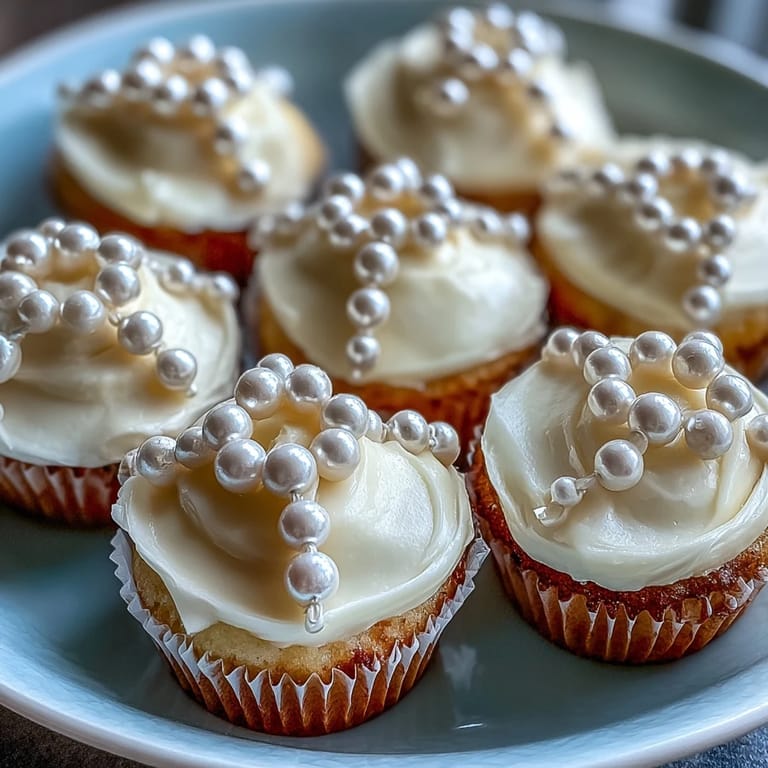
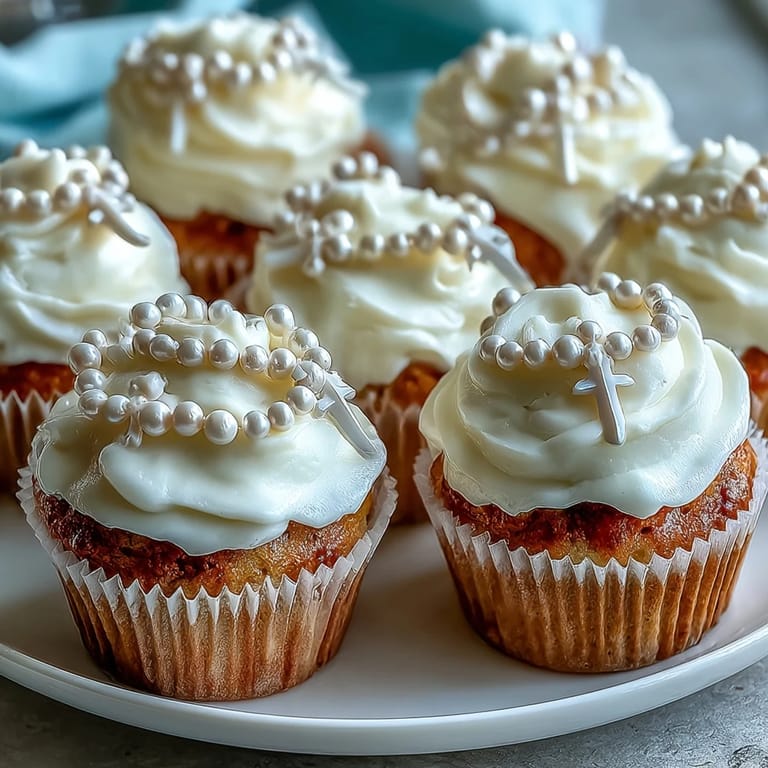
- Roll fondant into small beads about the size of peas, thread them onto a short chain shape using a damp brush to connect them, and form a tiny cross from fondant or a small cutter. The dampness acts like glue; too much makes it sticky, too little and the beads won't hold.
- Assemble just before serving:
- Place a fondant rosary on top of each frosted cupcake right before guests arrive so the fondant stays fresh and doesn't absorb moisture from the buttercream. This keeps the toppers bright and prevents them from softening.
 Save
Save I've handed these cupcakes to families stepping out of church, their children in white dresses and suits holding candles, and I've seen the small smile of recognition when the fondant rosary comes into view. These cupcakes do something that ordinary desserts don't—they acknowledge a moment and make it taste like something sacred.
Customizing Your Rosaries
The beauty of fondant rosaries is how personal they become once you start playing with color. I've made pale pink ones with silver pearls for girls, soft blue with gold accents for boys, and even white with rainbow pastels for children who chose their own combinations. Food coloring requires a light hand—a toothpick dipped in gel color mixed into fondant gives you control, while liquid coloring can make the fondant sticky and difficult to work with.
The Vanilla Question
These cupcakes lean entirely on vanilla for flavor, which means the quality of your extract changes everything. Imitation vanilla tastes sharp and one-dimensional, while real vanilla has warmth and complexity that deepens the entire bite. If you want to venture past vanilla, a quarter teaspoon of almond extract creates a subtle nod to the Italian tradition of macarons served at such celebrations, though you should mention this to guests in case of allergies.
Timing and Serving
These cupcakes taste best served at room temperature, when the buttercream is soft enough to yield and the vanilla flavor isn't muted by cold. Bake them the day before if you need to, keeping them unfrosted in an airtight container, then frost and top with fondant on the morning of the celebration. Pair them with sparkling lemonade for a light, celebratory feel, or with a sweet dessert wine for the adults lingering after the formal events.
- Fondant toppers can be made a day or two ahead and stored in an airtight container, which actually helps them firm up and hold their shape better.
- If you're transporting these to a venue, frost and add toppers right before serving to protect them from shifting or damage.
- Keep unfrosted cupcakes in the freezer for up to a month, thawing them completely before frosting so they frost evenly.
 Save
Save These cupcakes are small enough that every guest gets to take one home, still wrapped in its liner, a little edible memory of the day. That's when you know you've made something worth the effort.
Recipe FAQs
- → How do I achieve a moist cupcake texture?
Use room temperature eggs and softened butter, and avoid overmixing the batter to retain moisture and tenderness.
- → What’s the best way to color the fondant beads?
Lightly knead small amounts of pastel food coloring into white fondant until you reach the desired shade, avoiding over-saturation.
- → Can I prepare the fondant rosary toppers in advance?
Yes, prepare them a day ahead and let them dry at room temperature to keep their shape and firmness.
- → What tools are recommended for shaping the fondant crosses?
Use a small cross-shaped cutter for precision or a sharp knife for careful shaping.
- → How should I store the finished cupcakes?
Keep them covered at room temperature for up to two days or refrigerate in an airtight container for longer freshness.
- → What alternatives can I use to vanilla extract for flavor variation?
Almond extract is a lovely alternative that adds a nutty depth without overpowering the delicate cupcake flavor.