 Save
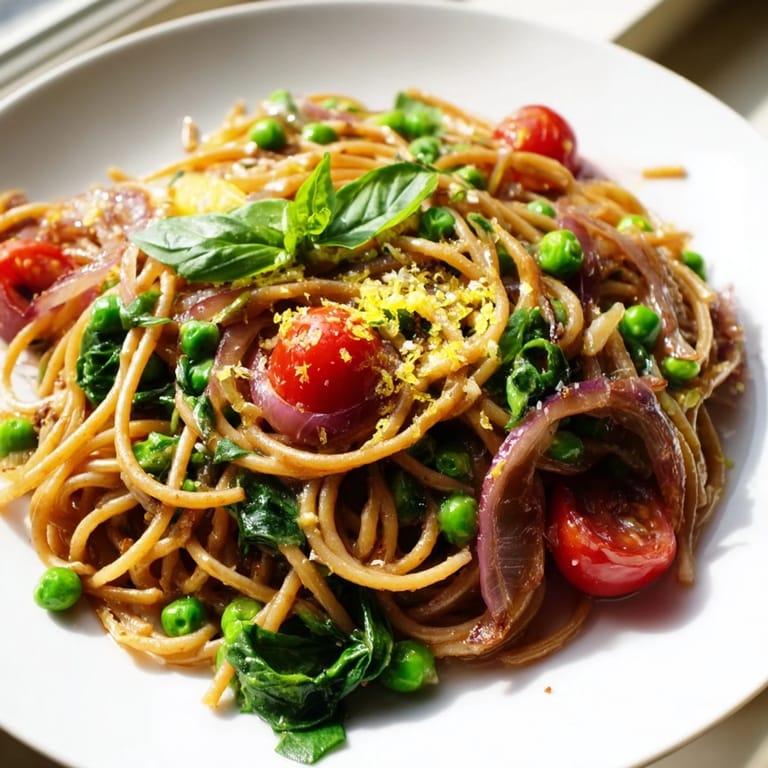
Save Last Tuesday, I stared at my farmers market haul wondering how to use everything before it turned. That spontaneous moment led to this one-pot wonder that has since saved my weeknight dinners repeatedly.
My sister was visiting when I first threw this together. She watched skeptically as I dumped everything into one pot, then proceeded to ask for seconds and request the recipe before she even finished her first serving.
Ingredients
- 350 g (12 oz) dried spaghetti: Traditional spaghetti works perfectly but feel free to use whole wheat for extra nutrition
- 150 g (1 cup) frozen or fresh peas: These add natural sweetness and keep their vibrant green color
- 100 g (3.5 oz) baby spinach: Wilts beautifully into the dish, adding nutrients without overpowering flavor
- 200 g (7 oz) cherry tomatoes, halved: They burst during cooking creating little pockets of sweetness throughout
- 2 cloves garlic, thinly sliced: Thin slices distribute flavor more evenly than mincing
- 1 small red onion, thinly sliced: Red onion becomes milder and sweeter as it cooks down
- 1 L (4 cups) vegetable broth: Use high quality broth as it becomes the base of your sauce
- 2 tbsp olive oil: Essential for sauteing the aromatics and adding richness
- 1/2 tsp salt: Adjust based on how salty your broth is
- 1/4 tsp black pepper: Freshly ground makes a noticeable difference
- 1/4 tsp red pepper flakes (optional): Adds gentle warmth without overwhelming the fresh flavors
- Zest of 1 lemon: Brightens everything and cuts through the richness
- 30 g (1/4 cup) grated Parmesan cheese: Use vegetarian Parmesan or nutritional yeast for dairy-free
- Fresh basil leaves, to serve: Tear them by hand for the most aromatic presentation
Tired of Takeout? 🥡
Get 10 meals you can make faster than delivery arrives. Seriously.
One email. No spam. Unsubscribe anytime.
Instructions
- Start your flavor base:
- Heat olive oil in your large pot over medium heat. Add sliced garlic and red onion, cooking until fragrant and softened, about 2 to 3 minutes.
- Add everything but the garnish:
- Add spaghetti, peas, spinach, and cherry tomatoes to the pot. Pour in the vegetable broth and bring everything to a boil.
- Season and simmer:
- Add salt, black pepper, and red pepper flakes. Stir occasionally to prevent the pasta from sticking to the bottom.
- Cook to perfection:
- Let it cook uncovered for 10 to 12 minutes. The pasta should be al dente and most liquid absorbed. Stir in the lemon zest.
- Finish and serve:
- Remove from heat immediately. Divide among plates and generously top with grated Parmesan and fresh basil leaves.
 Save
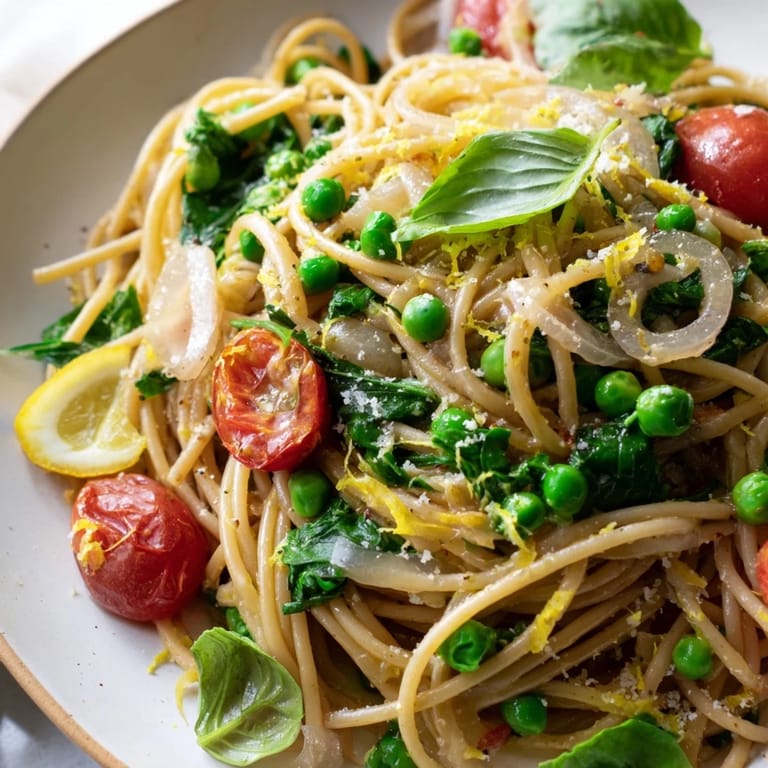
Save This recipe has become my go-to when friends drop by unexpectedly. It looks impressive but comes together so quickly that I can chat while I cook.
Making It Your Own
During spring I add asparagus pieces. Summer brings zucchini and fresh herbs. The method stays the same but the vegetables change with what looks best at the market.
Broth Matters
I learned the hard way that low quality broth makes a sad pasta. Now I keep a few cartons of my favorite vegetable broth in the pantry specifically for this recipe.
Leftover Magic
This pasta reheats beautifully for lunch the next day. Add a splash of water or broth when reheating to loosen it up. The flavors often taste even better after mingling overnight.
- Store in an airtight container for up to 3 days
- Reheat gently on the stove with a splash of water
- Add fresh herbs and a squeeze of lemon to brighten leftovers
 Save
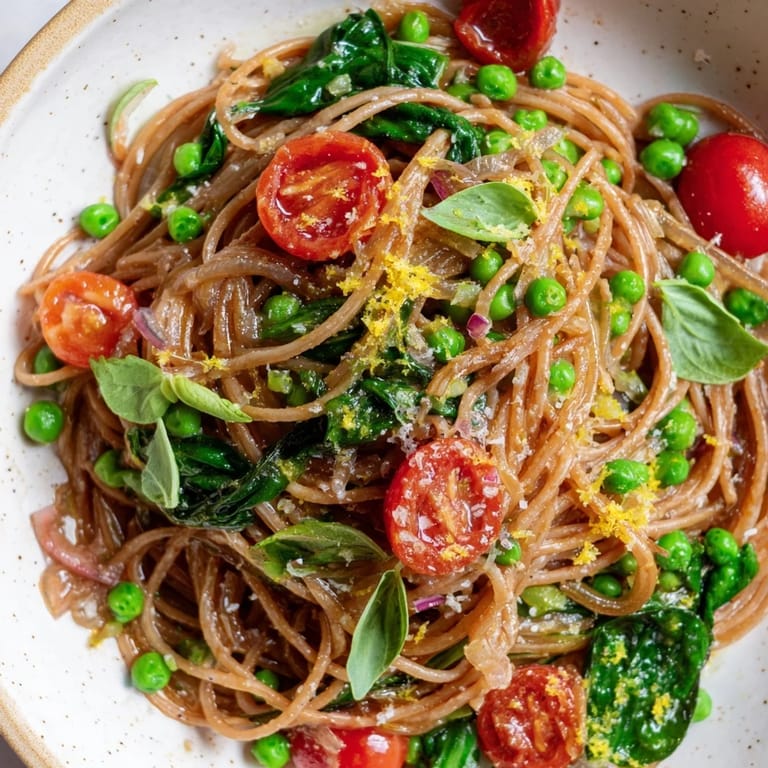
Save Simple, fresh, and done in one pot. That is my kind of spring dinner.
Recipe FAQs
- → Can I use fresh pasta instead of dried spaghetti?
Fresh pasta cooks more quickly than dried, so you'll need to adjust the cooking time. Add fresh pasta after the vegetables have simmered for a few minutes, and cook for just 2-3 minutes until al dente. You may also need slightly less liquid since fresh pasta doesn't absorb as much broth as dried varieties.
- → What other spring vegetables work well in this dish?
Asparagus pieces, sugar snap peas, snow peas, or diced zucchini make excellent additions. You can also add fresh artichoke hearts or fava beans when they're in season. Keep the total vegetable quantity similar to maintain the proper liquid ratio for cooking the pasta.
- → How do I store leftovers and reheat properly?
Store in an airtight container in the refrigerator for up to 3 days. The pasta will continue absorbing liquid, so add a splash of water or broth when reheating. Warm gently on the stovetop over medium-low heat, stirring occasionally, until heated through.
- → Can I make this gluten-free and dairy-free?
Absolutely. Use gluten-free spaghetti in place of regular pasta, and substitute nutritional yeast or a vegan Parmesan alternative. The cooking method remains the same, though you may need to adjust the liquid slightly depending on how much your chosen pasta absorbs.
- → What can I substitute for vegetable broth?
Chicken broth works if you're not strictly vegetarian. For a lighter option, use water enhanced with an extra tablespoon of olive oil and additional seasonings. You can also use the liquid from a can of white beans for extra protein and creaminess.
- → How can I add more protein to this dish?
Add a drained can of chickpeas or white beans during the simmering stage. Shredded rotisserie chicken works well if you're not vegetarian. You can also stir in fresh mozzarella balls or dollops of ricotta at the end for a creamy protein boost.