 Save
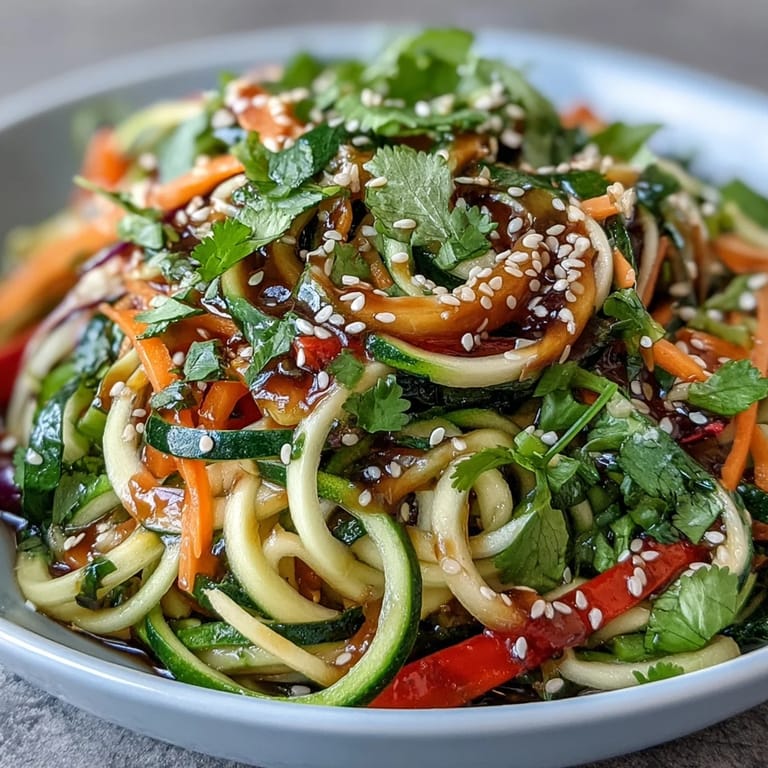
Save My spiralizer sat unused in a kitchen drawer for months until a sweltering afternoon when the thought of turning on the stove felt genuinely offensive. I pulled it out almost by accident, grabbed whatever vegetables looked crisp in the crisper drawer, and started spiralizing with the kind of mindless rhythm that somehow felt meditative. Twenty minutes later, I had this bowl of ribboned vegetables glistening with sesame-ginger dressing, and it tasted so alive and bright that I understood why people actually get excited about salads.
I made this for a potluck where I wasn't sure what other dishes would show up, and I almost didn't bring it because salads feel vulnerable at those gatherings. But it disappeared first, and someone actually asked for the dressing recipe, which might be the highest compliment a salad can receive. That moment taught me that simple food made with intention beats elaborate dishes that whisper apologies for themselves.
Ingredients
- Zucchini: Spiralizes into tender noodles that soak up dressing without getting soggy if you don't overdress them hours ahead.
- Carrot: Stays crisp and adds natural sweetness that balances the dressing's umami and heat.
- Red bell pepper: Sliced thin because spiralizing them creates awkward shapes, and thin slices catch the dressing better anyway.
- Red cabbage: Shredded finely so it softens slightly without becoming mushy, adding texture and visual drama.
- Cucumber: Spiralize it last or keep it separate until serving if you're making this ahead, otherwise it releases water and dilutes everything.
- Green onions: Thinly sliced, they brighten each bite with a whisper of sharpness that lingers on your tongue.
- Fresh cilantro: Chopped and scattered on top right before eating so it stays fragrant and doesn't wilt into the dressing.
- Toasted sesame oil: Use the good stuff here because there's nowhere for it to hide, and it's the soul of this whole salad.
- Rice vinegar: Milder than white vinegar, it adds tang without aggression.
- Soy sauce or tamari: Goes to the dressing, not directly on vegetables, so the saltiness distributes evenly.
- Freshly grated ginger: Microplaned so fine it melts into the dressing rather than landing as visible bits that catch between your teeth.
- Maple syrup or honey: Just enough to round out the sharp edges of vinegar and balance the heat from ginger.
- Garlic: Minced very small because raw garlic in dressing needs to stay in the background unless you want to breathe fire.
- Lime juice: A squeeze at the end adds brightness that sesame oil wants to settle into.
- Chili flakes: Optional but honestly necessary if you like eating food that wakes you up a little.
- Toasted sesame seeds: Sprinkled on top just before serving so they stay crunchy and don't soften from the moisture.
- Roasted peanuts or cashews: Optional protein that adds earthiness and makes the salad feel less like a side dish and more like a complete meal.
Tired of Takeout? 🥡
Get 10 meals you can make faster than delivery arrives. Seriously.
One email. No spam. Unsubscribe anytime.
Instructions
- Spiralize and slice with focus:
- Lay out your cutting board like you're setting a stage. Spiralize the zucchini, carrot, and cucumber in one motion each, letting the ribbons fall into a large bowl without overthinking it. Slice the bell pepper into thin strips the way you'd naturally hold a knife, and shred the cabbage fine enough that it softens just slightly from the dressing but stays structured enough to hold onto it.
- Combine all vegetables:
- Toss everything into that large bowl and step back for a moment to look at the colors. This is the most beautiful your salad will ever be, so take a mental snapshot or actually take a photo if you're that kind of person.
- Build the dressing with intention:
- In a separate bowl, pour the sesame oil first and smell it deeply, then whisk in the rice vinegar so it emulsifies slightly. Add the soy sauce, ginger, maple syrup, minced garlic, lime juice, and chili flakes if you want heat, whisking until the honey dissolves completely and everything tastes balanced on your tongue.
- Dress and marry the flavors:
- Pour the dressing over the vegetables and use two forks or your hands to toss gently, the way you'd handle something delicate. Let it sit for five to ten minutes so the noodles absorb the dressing without becoming limp, which is the sweet spot between crisp and flavorful.
- Garnish and serve immediately:
- Transfer to a serving platter and scatter sesame seeds and nuts across the top at the last possible moment. The contrast between warm dressing and cool vegetables, between soft noodles and crunchy seeds, is what makes this dish sing.
 Save
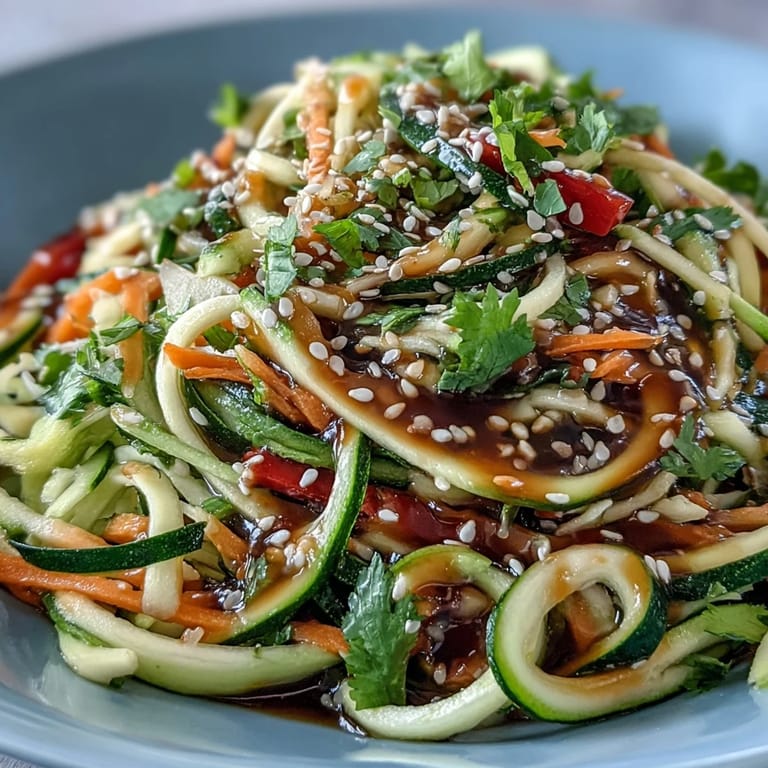
Save There's something profound about a salad that tastes like summer even when the calendar disagrees. My neighbor tasted this once and started asking for it every time we did a casual dinner, not because it's fancy but because it feels generous and thoughtful without demanding hours in the kitchen.
Why Spiralized Vegetables Matter
Spiralizing creates noodle-like strands that catch and hold dressing in a way that chopped or sliced vegetables simply can't, making every bite feel complete rather than requiring you to fish around for dressing. The thin ribbons also soften just enough from the acid in the dressing to become tender without losing their structure, which is a texture balance that feels almost luxurious in something so simple and plant-based.
The Dressing as Character
This dressing works because sesame oil, ginger, and garlic have this ancient partnership that somehow makes each other taste more like themselves. The maple syrup or honey isn't there to make it sweet but to round off the sharp edges and let the other flavors bloom without your tongue getting tired halfway through the bowl. Balance in dressing is everything, and this one hits all five taste notes without showing off.
Building Flexibility Into Your Salad
The beauty of this recipe is that it's a framework rather than a rigid formula, so trust your instincts about what goes in based on what's actually fresh in your market. Yellow squash, daikon, beets, or even thin-sliced fennel all spiralize beautifully and bring their own personality to the same dressing. For heartier appetites, baked tofu tucked underneath, grilled chicken on the side, or a soft egg on top transforms this from side dish to main course without changing anything fundamental about what makes it work.
- Add roasted chickpeas or edamame for plant-based protein that actually fills you up.
- Make a double batch of dressing because you'll use it on other salads, grain bowls, and roasted vegetables all week long.
- Prep the vegetables the morning of and dress them just before eating for the crispest, most vibrant version.
 Save
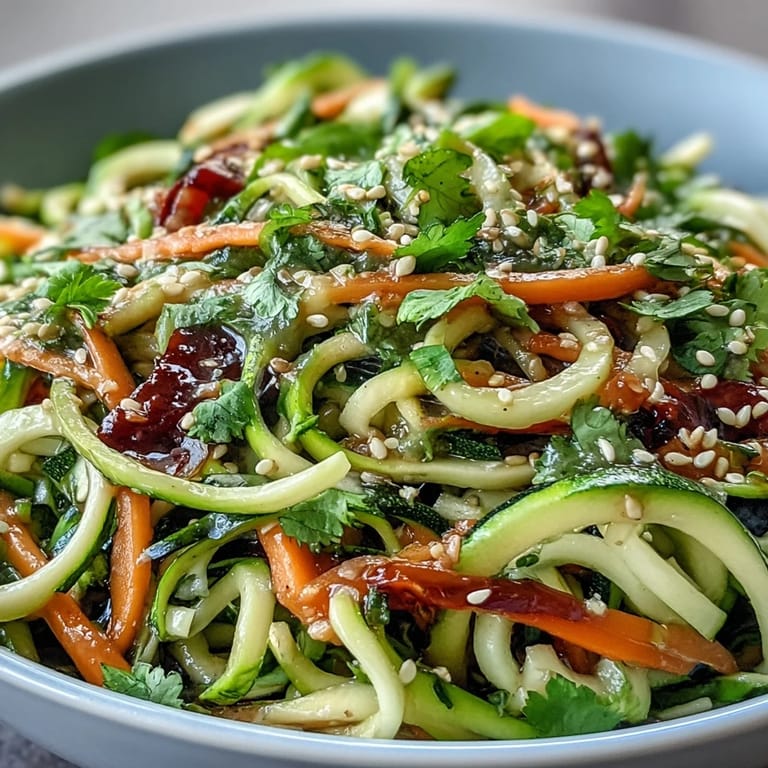
Save This salad taught me that the best dishes are the ones that feel light on your body but generous on your palate, simple enough to make on a Tuesday night but impressive enough to bring to someone's table when you want them to know you actually tried. Make this when you want to remember that eating well doesn't require drama.
Recipe FAQs
- → What vegetables work best for spiralizing?
Zucchini, carrots, yellow squash, cucumbers, and beets spiralize beautifully. Choose firm, fresh vegetables for the best results and texture retention.
- → Can I make this ahead of time?
Prepare the dressing and spiralized vegetables separately up to 24 hours in advance. Toss together shortly before serving to maintain the vegetables' crisp texture.
- → How can I add more protein to make it a complete meal?
Baked tofu, edamame, grilled chicken strips, or cooked shrimp work wonderfully. For plant-based options, try adding quinoa or chickpeas for extra protein and substance.
- → What if I don't have a spiralizer?
Use a julienne peeler or mandoline slicer to create thin vegetable ribbons. You can also simply shred or thinly slice vegetables for a similar texture and presentation.
- → How long will leftovers keep in the refrigerator?
Store in an airtight container for up to 3 days. Note that the vegetables will soften over time as they marinate in the dressing, so the texture will change but flavors will intensify.
- → Can I adjust the spice level?
Absolutely. Reduce or omit the chili flakes for a milder version, or increase them and add fresh minced chilies if you prefer more heat in your sesame-ginger dressing.