 Save
Save The smell of nutmeg mixing with warm ricotta is what I remember most from my first attempt at ravioli. I had underestimated how much moisture spinach holds, and my filling turned into a soggy mess before I learned to squeeze it dry with my hands over the sink. The dough fought me at first, sticking to the counter until I realized I was rushing it. Once I let it rest and gave myself permission to slow down, everything clicked. Now, making ravioli feels less like a recipe and more like a quiet Saturday ritual.
I made these for my sister after she moved into her first apartment, and we ended up laughing over how many ravioli burst open in the pot because I had not sealed the edges properly. She did not care. We ate the broken ones first, standing at the stove with forks, dipping them straight into the marinara. That night taught me that imperfect ravioli shared with someone you love tastes better than flawless ones eaten alone.
Ingredients
- All purpose flour: The base of your dough, and it needs to be measured lightly, not packed, or the dough will be too stiff to roll thin.
- Eggs: They give the pasta its golden color and tender bite, and using room temperature eggs makes mixing easier.
- Ricotta cheese: The creamy heart of the filling, and whole milk ricotta works best because it has the right balance of moisture and richness.
- Fresh spinach: Adds color and a subtle earthiness, but you must wring it out completely or the filling will leak during cooking.
- Parmesan cheese: Sharpens the flavor of the filling and helps bind everything together without making it heavy.
- Egg yolk: Enriches the filling and helps it hold its shape inside the pasta.
- Nutmeg: A tiny amount transforms the filling from plain to something you cannot stop thinking about.
- Marinara sauce: A good quality store bought sauce works perfectly, or use your own if you have time.
- Garlic: Just enough to wake up the sauce without overpowering the delicate ravioli.
- Fresh basil: Torn at the last second, it adds a bright, peppery finish that ties everything together.
Tired of Takeout? 🥡
Get 10 meals you can make faster than delivery arrives. Seriously.
One email. No spam. Unsubscribe anytime.
Instructions
- Make the Pasta Dough:
- Mound your flour on a clean counter and create a well in the center, then crack in the eggs and add the salt. Use a fork to slowly pull flour into the eggs, mixing until a shaggy dough forms, then knead it with your hands for 8 to 10 minutes until it feels smooth and springs back when you press it.
- Rest the Dough:
- Wrap the dough tightly in plastic wrap and let it sit on the counter for 30 minutes. This step is not optional, it relaxes the gluten and makes rolling so much easier.
- Prepare the Filling:
- Steam or quickly saute the spinach until it wilts, then let it cool before squeezing out every drop of water you can with your hands. Mix it with the ricotta, Parmesan, egg yolk, nutmeg, salt, and pepper until everything is evenly combined and smooth.
- Roll the Pasta:
- Cut the dough in half and work with one piece at a time, keeping the other covered. Roll it as thin as you can, about 1/16 inch, using a pasta machine or a rolling pin and a lot of patience.
- Shape the Ravioli:
- Lay one sheet of pasta flat and place teaspoons of filling in rows, about 2 inches apart. Brush the edges and spaces between with water, then lay the second sheet on top and press firmly around each mound to seal, making sure no air is trapped inside.
- Cut and Seal:
- Use a knife or ravioli cutter to cut into squares, then press the edges with a fork to make sure they are tightly sealed. Set them on a floured surface so they do not stick.
- Cook the Ravioli:
- Bring a large pot of salted water to a gentle boil and cook the ravioli in batches for 3 to 4 minutes, until they float to the top. Lift them out carefully with a slotted spoon.
- Warm the Sauce:
- Heat olive oil in a saucepan over medium heat and saute the garlic for about a minute, just until it smells fragrant. Add the marinara, season with salt and pepper, and let it simmer for 5 minutes.
- Plate and Serve:
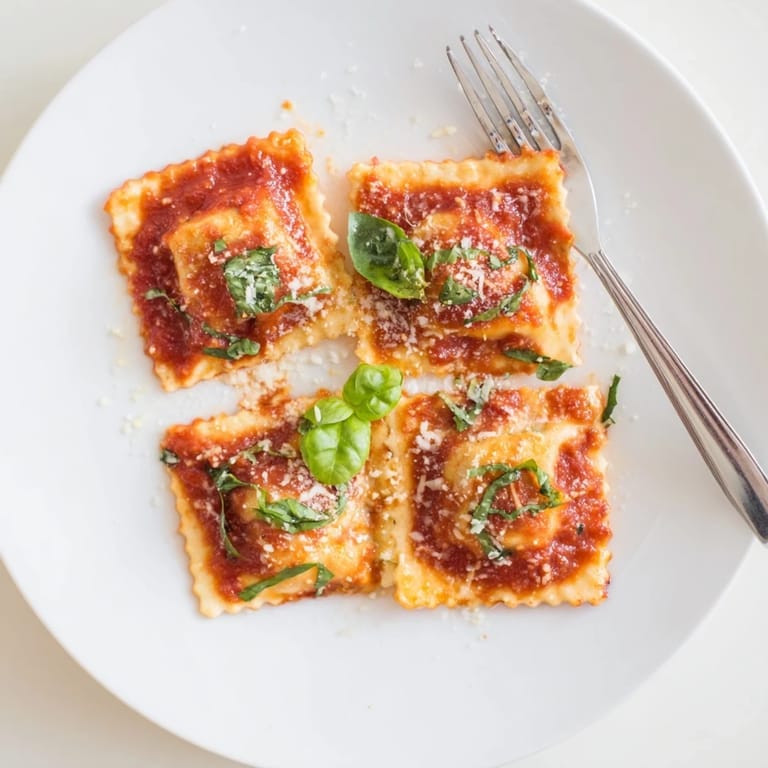
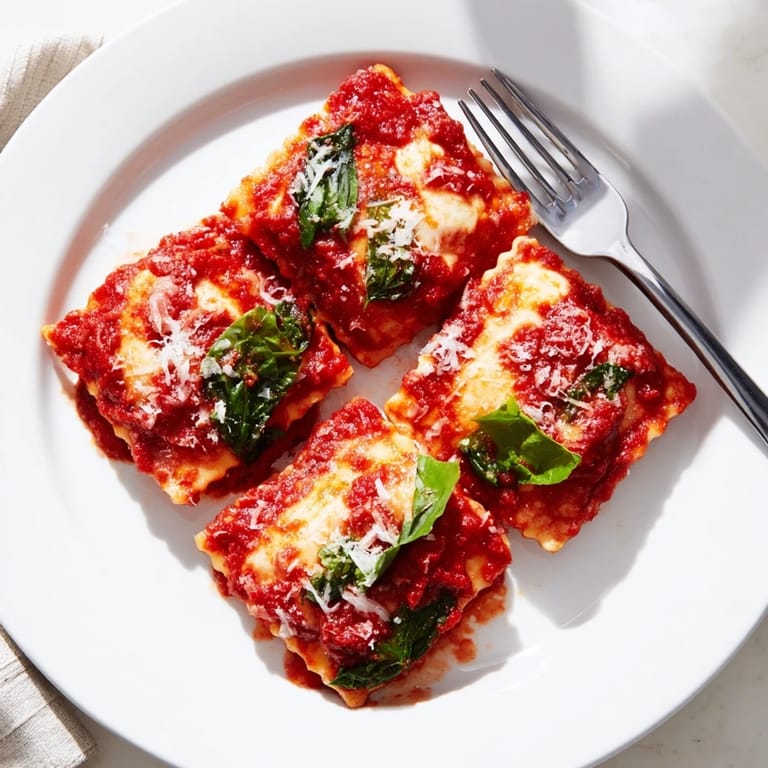
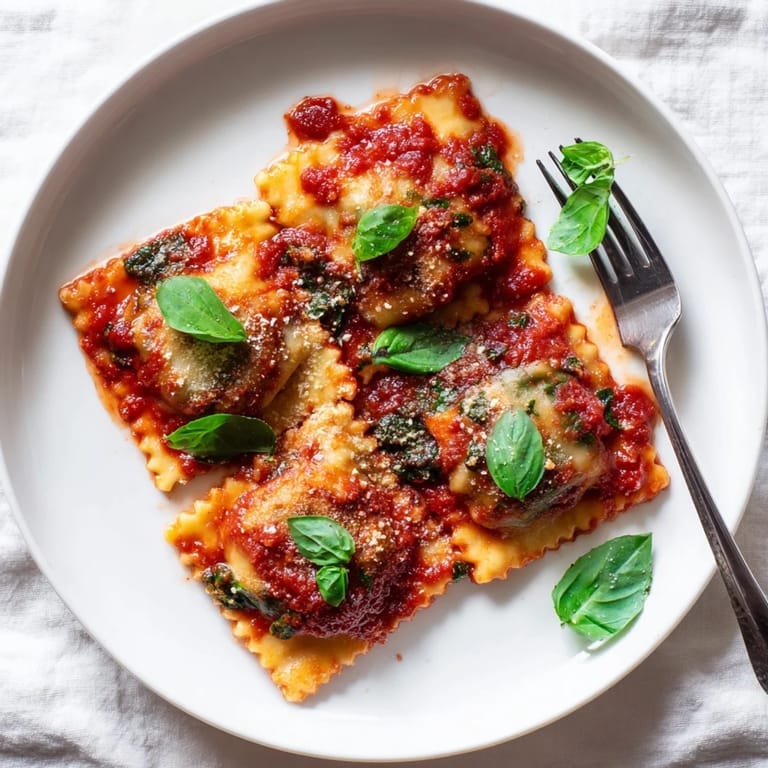
- Spoon a little sauce onto each plate, arrange the ravioli on top, and add more sauce, fresh basil, and a generous grating of Parmesan.
 Save
Save One evening, I served these to a friend who had just come back from a trip to Italy, and I was nervous she would compare them to what she had eaten there. She took one bite, closed her eyes, and said they tasted like the little trattoria near her hotel. I do not know if that was true, but I will never forget the way she said it, like I had given her a piece of her trip back.
What to Do with Leftover Filling
If you have filling left over, do not throw it away. I have stirred it into scrambled eggs the next morning, spread it on toast with a drizzle of olive oil, and even used it as a base for stuffed mushrooms. It keeps in the fridge for up to three days and honestly tastes good on just about anything warm and carby.
Making the Dough Ahead
The dough can be made a day ahead and kept wrapped tightly in the fridge, which actually makes it easier to roll because it stays cool and firm. Just let it sit at room temperature for about 10 minutes before you start rolling, or it will crack. I have also frozen dough for up to a month, and it works perfectly once thawed overnight in the fridge.
Serving Suggestions
These ravioli are rich enough to stand on their own with just marinara, but sometimes I toss them in brown butter with sage instead, which feels a little fancier without any extra effort. A simple arugula salad on the side with lemon and olive oil cuts through the richness, and crusty bread is non negotiable for mopping up any leftover sauce.
- Serve with a crisp white wine like Pinot Grigio or a light red like Chianti.
- Garnish with extra Parmesan, fresh cracked pepper, and torn basil right before serving.
- If you are feeling indulgent, finish with a drizzle of good olive oil over the top.
 Save
Save There is something about making ravioli that slows time down in the best way, and every time I do it, I remember why I fell in love with cooking in the first place. I hope you feel that too, even if your first batch is not perfect.
Recipe FAQs
- → How do I prevent my ravioli from bursting while cooking?
Ensure the edges are properly sealed by brushing with water and pressing firmly with a fork. Avoid overfilling each ravioli, and maintain a gentle boil rather than a rolling boil when cooking.
- → Can I make ravioli ahead and freeze them?
Yes, arrange uncooked ravioli on a parchment-lined baking sheet, freeze until solid (about 2 hours), then transfer to freezer bags. Cook directly from frozen, adding an extra minute or two to the cooking time.
- → What's the best way to squeeze out spinach moisture?
After cooking spinach, place it in a fine mesh strainer and press with the back of a wooden spoon. For extra dryness, wrap it in cheesecloth and squeeze gently.
- → Can I use store-bought pasta sheets instead of making dough?
Absolutely. Fresh or dried pasta sheets work well and significantly reduce preparation time. Simply fill, seal, and cook according to package directions.
- → How thick should the pasta dough be when rolling?
Roll the dough to about 1/16 inch thick—thin enough to see your hand through it. This allows the pasta to cook through while remaining tender.
- → What wine pairs best with this dish?
A crisp white wine like Pinot Grigio complements the creamy filling and tomato sauce beautifully. The acidity cuts through the richness of the ricotta and cheese.