 Save
Save One quiet Tuesday evening, I found myself with a near-empty fridge and an odd craving for something warm but not heavy. I had silken tofu sitting there, some wilting vegetables, and a carton of vegetable broth, so I started layering flavors into a pot almost without thinking. Within twenty minutes, I had a bowl of the most delicate, soul-settling soup, and my roommate emerged from their room asking what smelled so good. That spontaneous moment taught me that the simplest ingredients, when treated with intention, can become something unexpectedly nourishing.
I made this soup for a friend who was recovering from being under the weather, and watching them slowly brighten with each bowl reminded me why I cook. There was no fuss, no heavy cream or complicated techniques, just pure comfort in a bowl that their body seemed to thank me for.
Ingredients
- Low-sodium vegetable broth (1.5 liters): The foundation of everything—use quality broth because it has nowhere to hide, and the delicate flavors depend on its clarity and depth.
- Soy sauce (2 tablespoons): This is where umami lives; tamari works beautifully if you need gluten-free, and the difference in taste is almost unnoticeable.
- Fresh ginger (1 tablespoon, thinly sliced): Slice it into coins rather than mincing so you can fish out the pieces if you prefer, and it releases its warmth more gradually into the broth.
- Garlic (2 cloves, minced): Mince it fine so it distributes evenly and doesn't leave bitter chunks, and always add it with the ginger so they bloom together.
- Sesame oil (1 teaspoon): This is precious stuff, so use it to open the flavor profile at the start rather than adding it at the end.
- Carrot (1 medium, julienned): Cutting it into thin matchsticks ensures it cooks in the time you need without becoming mushy.
- Shiitake mushrooms (100 g, sliced): They add an earthy depth that transforms simple broth into something with real character.
- Baby bok choy (100 g, chopped): The tender leaves add a slight mineral sweetness and wilting bok choy looks beautiful floating in the finished bowl.
- Red bell pepper (1 small, thinly sliced): The color matters as much as the flavor—it keeps the soup from looking monochromatic.
- Spring onions (2, sliced): Add them late so they keep their freshness and slight crunch.
- Silken tofu (300 g, cubed): Handle it like you're cradling something fragile; silken tofu wants to be gentle, and rough handling turns it to cloudy water.
- Fresh cilantro (optional): A small handful scattered on top brings brightness that makes people notice something special in their bowl.
- Toasted sesame seeds (1 teaspoon, optional): Toast them yourself if you can because store-bought sometimes tastes stale, and the nutty warmth makes a real difference.
- Lime wedges (optional): A squeeze at the end lifts everything and adds a finishing note that feels intentional.
Tired of Takeout? 🥡
Get 10 meals you can make faster than delivery arrives. Seriously.
One email. No spam. Unsubscribe anytime.
Instructions
- Start with the aromatics:
- Heat sesame oil in a large pot over medium heat and let it shimmer for just a moment before adding the minced garlic and sliced ginger. You'll know it's ready when the kitchen fills with that distinctive warm, almost peppery fragrance—usually 1 to 2 minutes of gentle sizzling.
- Build the broth base:
- Pour in the vegetable broth and soy sauce, stirring once to combine, then let it come to a gentle simmer rather than a rolling boil. You want to hear a soft whisper, not an aggressive bubble, so the delicate flavors stay intact.
- Add the sturdy vegetables:
- Slip in the carrot matchsticks, shiitake slices, and red bell pepper strips, letting them cook for about 5 minutes until they soften slightly but still hold their shape. This staggered timing prevents everything from finishing at once.
- Finish with the tender vegetables:
- Stir in the chopped bok choy and sliced spring onions, cooking for just 2 to 3 minutes more until the greens turn bright and tender. The soup will smell alive at this point.
- Welcome the tofu:
- Very gently add your cubed silken tofu to the pot, letting it settle without stirring aggressively—think of it as introducing a guest who needs to feel at home. Give it 2 minutes to warm through, and the cubes will stay intact if you keep your spoon movements soft.
- Taste and adjust:
- Take a quiet moment to taste the soup, feeling the balance of salt and flavor, and add another splash of soy sauce if it needs a deeper umami note. This step separates a good soup from one that tastes like it knows itself.
- Serve with intention:
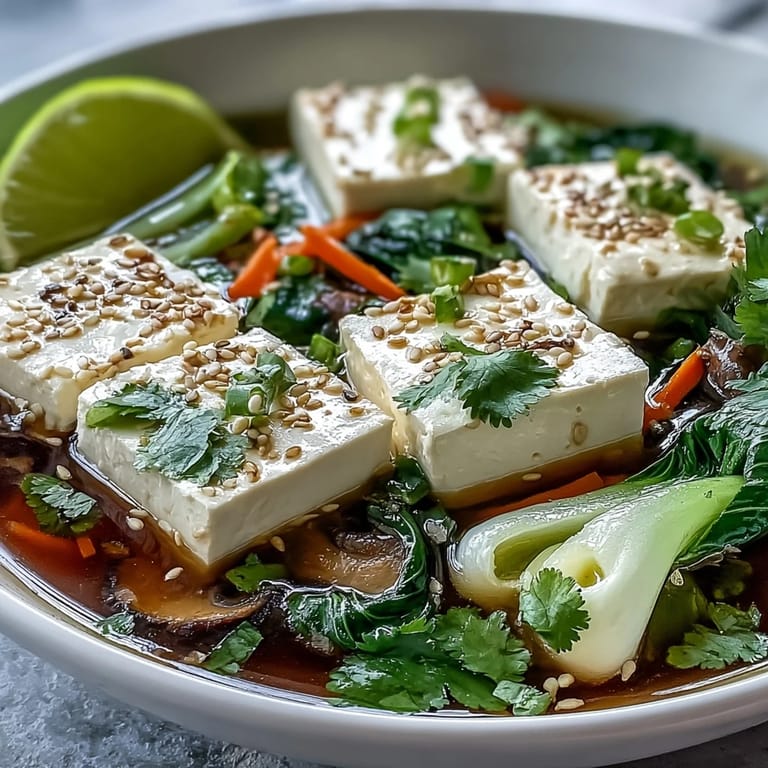
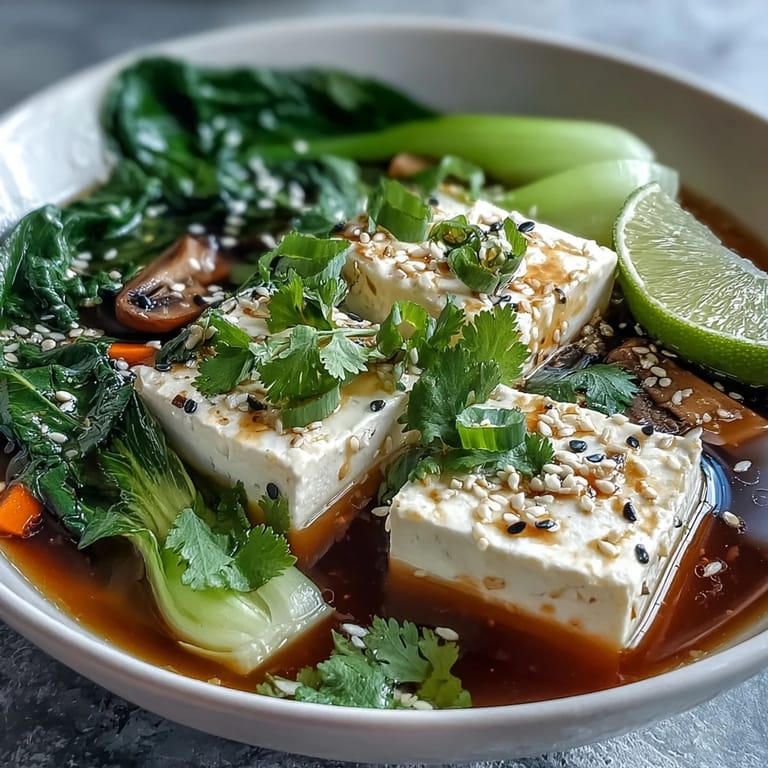
- Ladle into bowls slowly, making sure each person gets vegetables and tofu in their portion, then finish with cilantro, a scattering of sesame seeds, and a lime wedge on the side. Let people squeeze and garnish their own bowls if they're sitting together.
 Save
Save There's something about a bowl of this soup that makes conversation slow down and breath deepen. I've noticed people eat it more mindfully than they eat other things, which says something about how food without heaviness allows you to actually taste and feel what you're having.
The Art of the Gentle Hand
Learning to cook with silken tofu taught me something unexpected about patience and respect for ingredients. The tofu doesn't need agitation or aggressive heat; it needs a calm environment where it can simply warm and absorb flavor without falling apart.
Seasonal Play and Vegetable Swaps
This soup is a living recipe that changes with the season and whatever your market offers. I've made it with snow peas in spring, napa cabbage in winter, and enoki mushrooms when I wanted something with a different texture, and each version feels both new and familiar.
Heat, Flavor, and Personal Preference
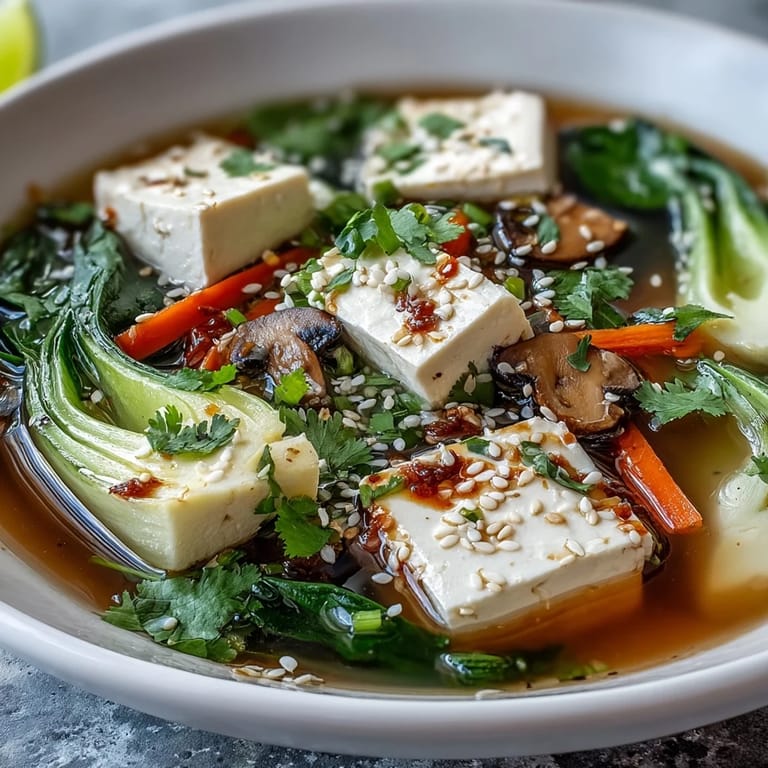
The base broth is delicate and mild, which means it's a perfect canvas for your own heat tolerance and flavor mood. Some nights I want it exactly as written, a gentle whisper of nourishment, and other nights I stir in chili oil or fresh sliced chili right before serving, letting people adjust their own bowls to what they need.
- Keep chili oil or fresh chilies on the side so each person can control their own heat level.
- Try adding a splash of rice vinegar instead of lime for a different brightness that plays beautifully with the umami.
- Silken tofu is most forgiving when the broth is between warm and barely simmering, so be gentle with your heat settings.
 Save
Save This soup has become my go-to for moments when I want to cook something real but not demanding, something that tastes thoughtful without requiring hours of work. It reminds me that some of the best meals are the simplest ones, made with your full presence rather than a complicated list.
Recipe FAQs
- → Can I use firm tofu instead of silken?
Yes, firm tofu works well and provides more texture. Cube and add it during the last 3-4 minutes of cooking to heat through without breaking apart.
- → How long does this soup keep in the refrigerator?
Store in an airtight container for up to 3 days. The tofu may soften slightly but will maintain its flavor. Reheat gently on the stove.
- → Can I freeze this soup?
Freezing is not recommended as the tofu texture changes significantly and vegetables may become mushy. Best enjoyed fresh within a few days.
- → What other vegetables can I add?
Snow peas, napa cabbage, enoki mushrooms, spinach, or bean sprouts make excellent additions. Add quick-cooking greens during the last 2 minutes.
- → How can I make this soup spicy?
Add a dash of chili oil, sriracha, or sliced fresh chilies during the last minute of cooking. Adjust amount to your preferred heat level.
- → Is this suitable for meal prep?
Yes, prepare the broth and vegetables in advance. Add the tofu just before serving to maintain its delicate texture. Reheat gently on the stove.